From isolated haunted houses and fog-shrouded landscapes to ghostly encounters and secrets buried for generations, discover 25 supernatural mystery books that will stay with you long after the final page.
There is something irresistible about a good supernatural mystery. Perhaps it is the creeping suspicion that the world is not quite as ordinary as we believe. Perhaps it is the thrill of discovering a secret that someone, somewhere, desperately wanted to keep hidden. Or perhaps we simply enjoy being frightened, provided we can close the book and reassure ourselves that everything is perfectly normal.
Until something goes bump in the night.
I'm E.M. Wallis, a British author of supernatural mysteries including Whispers in the Fog, GHOSTED and The Last Caller. I've always been fascinated by the things we cannot explain, particularly when they collide with the darker aspects of human nature. The secrets people carry, the memories they try to suppress and the possibility that some stories refuse to end simply because the people involved are no longer alive to tell them.
For me, the best supernatural mysteries are not necessarily the ones with the most terrifying ghosts. They are the stories that make us question what we believe, draw us into the lives of their characters and leave us wondering whether the extraordinary might be hiding somewhere within the ordinary.
A creaking floorboard becomes a warning. An abandoned house conceals a terrible history. A voice from the past refuses to remain silent.
I've brought together 25 atmospheric supernatural mysteries that demonstrate the extraordinary range of this genre. Some are established classics. Others offer contemporary interpretations of the supernatural. A few deliberately leave us wondering whether the haunting is real or whether the greatest mysteries lie within the human mind.
These are recommendations from other authors whose work deserves exploring. I've kept my own fiction separate, with a short introduction to my books at the end.
One thing unites them all: their ability to make the ordinary feel extraordinary.
1. The Haunting of Hill House: Shirley Jackson
Few novels have influenced supernatural fiction quite like The Haunting of Hill House. When a small group gathers at an isolated mansion to investigate reports of paranormal activity, the house begins to exert a disturbing influence over its visitors.
Jackson's genius lies in her restraint. The novel rarely needs to explain what is happening because uncertainty itself becomes the source of terror. The house feels like a character, its corridors and rooms creating an atmosphere of growing psychological unease.
Why read it? A masterclass in ambiguous hauntings, psychological tension and the unsettling power of place.
2. The Woman in Black: Susan Hill
A young solicitor travels to a remote English village to settle the affairs of a deceased client. His work takes him to Eel Marsh House, an isolated property surrounded by marshland and accessible by a causeway.
There he encounters a mysterious woman dressed in black, whose presence appears connected to a tragedy the villagers are reluctant to discuss.
Hill uses mist, isolation and silence to extraordinary effect. The result is a traditional English ghost story that proves atmosphere can be more frightening than graphic horror.
Why read it? For its haunting coastal setting, gradual revelations and chilling sense of inevitability.
3. Dark Matter: Michelle Paver
Set during an Arctic expedition in 1937, Dark Matter follows a young man who joins a scientific venture to a remote and increasingly hostile wilderness.
As the polar night approaches and his companions depart, he finds himself facing months of darkness in a place that may not be as deserted as it first appeared.
The Arctic landscape becomes central to the terror. Endless darkness, bitter cold and isolation combine with the suggestion of an unseen presence.
Why read it? One of the most effective examples of how isolation and landscape can transform a ghost story.
4. The Silent Companions: Laura Purcell
When a young widow arrives at her late husband's country estate, she discovers an unsettling collection of painted wooden figures known as silent companions.
The figures appear almost lifelike, and their presence becomes increasingly disturbing as the history of the house begins to emerge.
Purcell blends Victorian Gothic fiction with psychological uncertainty, creating an atmosphere in which even an apparently harmless object becomes threatening.
Why read it? For its sinister historical setting, disturbing imagery and expertly sustained unease.
5. The Little Stranger: Sarah Waters
In post-war Warwickshire, a doctor becomes involved with the inhabitants of Hundreds Hall, a once-grand country house now falling into decline.
As strange incidents begin to occur, the family's already fragile circumstances deteriorate. But is the house haunted, or are its occupants being destroyed by something more human?
Waters combines social change, family tension and Gothic suspense in a story that refuses to offer easy answers.
Why read it? For its psychological depth, decaying country-house atmosphere and unsettling ambiguity.
6. The Sun Down Motel: Simone St. James
A young woman investigating her aunt's disappearance takes a job at the same roadside motel where her relative worked decades earlier.
The motel has changed remarkably little. Neither, it seems, have the strange occurrences associated with it.
Moving between two timelines, the novel combines a missing-person investigation with paranormal activity and a growing sense of danger.
Why read it? An excellent choice for readers who enjoy traditional crime mysteries with a supernatural dimension.
7. The Broken Girls: Simone St. James
Idlewild Hall was once a boarding school for troubled girls. Years after its closure, the building still carries rumours of a haunting and memories of a student's mysterious disappearance.
When a journalist begins investigating the school's history, she uncovers connections between past tragedies and more recent events.
The dual timelines allow the mystery to develop gradually, while the abandoned school provides an atmospheric setting.
Why read it? For its compelling blend of historical secrets, investigative suspense and ghostly encounters.
8. The Turn of the Screw: Henry James
A governess arrives at a remote country estate to care for two children. Before long, she becomes convinced that sinister figures are watching them.
But are these apparitions genuine, or is the governess interpreting ordinary events through an increasingly troubled imagination?
James creates uncertainty that has fascinated readers for generations. Every interpretation raises further questions.
Why read it? A landmark psychological ghost story that demonstrates the power of an unreliable perspective.
9. The Thirteenth Tale: Diane Setterfield
A reclusive novelist invites a young biographer to hear the truth about her extraordinary past.
What follows is a story of family secrets, troubled relationships, a mysterious country house and events that seem to resist explanation.
Although more Gothic family mystery than conventional ghost story, The Thirteenth Tale belongs on this list because of its extraordinary atmosphere and fascination with the stories people conceal.
Why read it? For its intricate storytelling, Gothic setting and slowly unfolding family mysteries.
10. The Hacienda: Isabel Cañas
Set in Mexico after the War of Independence, The Hacienda follows a young woman whose marriage offers the promise of security and a new beginning.
Her husband's remote estate, however, conceals a threatening presence, and the household seems determined to prevent her from discovering the truth.
Cañas combines Gothic suspense with historical and cultural detail, producing a haunted-house story with a distinctive identity.
Why read it? For its richly realised setting, escalating supernatural danger and buried secrets.
11. Mexican Gothic: Silvia Moreno-Garcia
When a young woman receives a disturbing letter from her cousin, she travels to an isolated English-style mansion in the Mexican countryside.
The house is oppressive, its inhabitants secretive and its atmosphere increasingly nightmarish.
Moreno-Garcia combines Gothic conventions with unsettling biological and supernatural elements, gradually revealing the sinister forces beneath the mansion's elegant exterior.
Why read it? For its striking imagery, claustrophobic atmosphere and imaginative approach to Gothic horror.
12. The Invited: Jennifer McMahon
A couple leave city life behind to build a house in rural Vermont, hoping to create their ideal home.
But the land has a disturbing history, and their dream project becomes entangled with local legends and unresolved events.
McMahon turns the familiar haunted-house premise on its head by exploring what happens when people build a new home upon a troubled past.
Why read it? For its unusual premise, eerie rural atmosphere and satisfying mystery.
13. The Haunting of Maddy Clare: Simone St. James
In 1920s England, a young woman accepts work assisting two men investigating a reported haunting.
Their assignment leads them to a remote property where a violent spirit appears to be connected to a tragic history.
As the investigation develops, the characters must uncover the truth behind the haunting while confronting dangers of their own.
Why read it? For its combination of historical mystery, paranormal investigation and emotional storytelling.
14. The Family Plot: Cherie Priest
When a salvage company begins dismantling an old house, its workers discover that the property holds more than valuable architectural materials.
Strange occurrences soon suggest that the building's history has not been laid to rest.
Priest gives the haunted-house story an engaging practical dimension: the characters are there to work, not to investigate ghosts, making their discoveries particularly unsettling.
Why read it? For its unusual setting, ghostly mystery and steadily increasing tension.
15. Home Before Dark: Riley Sager
A woman inherits the house her family fled when she was a child, a property made notorious by her father's bestselling account of its haunting.
Determined to discover what really happened, she returns to a place whose reputation has overshadowed her life.
Sager combines conflicting accounts, family secrets and unsettling incidents in a thriller that continually challenges the reader's assumptions.
Why read it? For its twists, unreliable family history and questions about whether a haunting can be believed.
16. The Book of Cold Cases: Simone St. James
A true-crime blogger secures an interview with a woman once accused of two murders.
The woman's imposing home and troubling past soon become central to an investigation that moves beyond ordinary crime reporting.
As the blogger searches for answers, the possibility of supernatural involvement complicates an already disturbing mystery.
Why read it? For its cold-case investigation, atmospheric setting and blend of crime fiction with paranormal suspense.
17. Wakenhyrst: Michelle Paver
In Edwardian Suffolk, a young woman grows up in an isolated manor house beside the mysterious Fens.
Her father's obsession with a medieval painting becomes increasingly disturbing, while the surrounding landscape seems to conceal ancient fears.
Paver's attention to historical detail and the natural environment creates an atmosphere in which superstition, repression and psychological unease become inseparable.
Why read it? For its haunting Fenland setting, Gothic family tensions and carefully developed dread.
During a 1935 mountaineering expedition in the Himalayas, a group of climbers attempts to conquer a formidable peak.
But the mountain carries a troubling history, and as conditions deteriorate, the expedition encounters something that cannot easily be explained.
Paver makes the altitude, isolation and physical dangers of climbing central to the supernatural mystery.
Why read it? For its bleak mountain atmosphere, mounting dread and sense of vulnerability.
19. The Essex Serpent: Sarah Perry
In Victorian Essex, rumours circulate that a legendary creature has returned to the marshes.
A scientifically minded widow becomes fascinated by the reports, while the local community struggles to reconcile superstition, faith and rational explanation.
This is not a conventional ghost story. Its supernatural possibilities remain entwined with human belief, desire and fear.
Why read it? For its evocative landscape, literary storytelling and exploration of the boundary between folklore and reality.
20. The Death of Jane Lawrence: Caitlin Starling
A practical young woman enters a marriage of convenience with a doctor, only to discover that his remote ancestral home conceals disturbing secrets.
Unexplained events, strange rules and the suggestion of occult forces gradually undermine her understanding of the world.
Starling combines Gothic romance, psychological horror and supernatural mystery in a story that becomes increasingly unpredictable.
Why read it? For its unsettling mansion, occult intrigue and darkly imaginative atmosphere.
A young woman accepts a position caring for children in a remote Norwegian house built above a fjord.
The family's history is troubled, the surrounding landscape feels threatening and local folklore suggests that unseen forces may be at work.
Cooke combines emotional tension with Nordic mythology and the claustrophobia of an isolated home.
Why read it? For its dramatic Scandinavian setting, haunting folklore and psychological suspense.
22. The Whispering House: Elizabeth Brooks
A young woman visits an old country house and becomes increasingly fascinated by its history, its inhabitants and a mysterious portrait.
What begins as curiosity develops into an unsettling investigation of family secrets and troubling events.
The novel uses classic Gothic elements to explore obsession, vulnerability and the dangerous attraction of places that seem to hold answers.
Why read it? For its atmospheric country-house setting and slow-burning mystery.
23. The Poison Thread: Laura Purcell
In Victorian England, a young woman becomes fascinated by a seamstress imprisoned after a series of suspicious deaths.
The prisoner claims that her needlework possesses a sinister power, raising questions about whether the explanation lies in the supernatural or in human cruelty.
Purcell explores class, injustice and belief through a dark and intricately constructed Gothic mystery.
Why read it? For its unusual supernatural premise, Victorian atmosphere and morally complex characters.
24. The Last House on Needless Street: Catriona Ward
At the end of an ordinary street stands a house associated with unsettling rumours and a long-standing mystery.
Its inhabitants seem to live according to their own peculiar rules, while the past exerts an increasingly powerful influence over the present.
Ward creates a deeply unsettling psychological mystery in which appearances are deceptive and the reader must continually reconsider what is happening.
Why read it? For its ingenious structure, disturbing atmosphere and extraordinary twists.
No exploration of atmospheric supernatural mysteries would be complete without Bram Stoker's Dracula.
Told through letters, journals and other documents, the novel follows a group of people attempting to understand and confront a terrifying supernatural threat.
From the remote mountains of Transylvania to the streets of Victorian England, Stoker creates a world in which rational investigation meets ancient evil.
Why read it? For its enduring Gothic atmosphere, investigative structure and enormous influence on supernatural fiction.
What Makes an Atmospheric Supernatural Mystery So Compelling?
Looking across these 25 books, several common ingredients emerge.
Setting matters. Whether the story unfolds in a lonely Arctic outpost, a decaying country house or a forgotten roadside motel, the environment becomes an essential part of the mystery. The most effective settings are not merely backgrounds. They influence the characters, shape the danger and create the impression that something is waiting just beyond our understanding.
Secrets drive the story. Many supernatural mysteries begin with an event that nobody can explain. Yet beneath the haunting lies a more recognisable human question. Who was responsible? What happened here? Why has the truth been concealed? The supernatural becomes a means of uncovering the past rather than simply frightening the reader.
Uncertainty is powerful. Some of the most memorable books on this list never fully resolve whether their events are paranormal or psychological. They invite us to question the reliability of memory, the motives of characters and the explanations we create for things we cannot understand.
Emotion gives the mystery meaning. A ghost without a history may frighten us briefly. A ghost connected to grief, injustice, guilt or unfinished business can remain in our imagination for years.
Perhaps that is why supernatural mysteries continue to fascinate readers. Beneath the apparitions and unexplained events, they often explore something deeply human: our fear that the past is never entirely gone.
Enjoy These Supernatural Mysteries? Discover My Books
If you've enjoyed exploring these 25 supernatural mysteries, perhaps I can tempt you with a few stories of my own.
My fiction explores the unsettling space between the ordinary and the unexplained, where secrets refuse to remain buried and the past has a habit of reaching into the present.
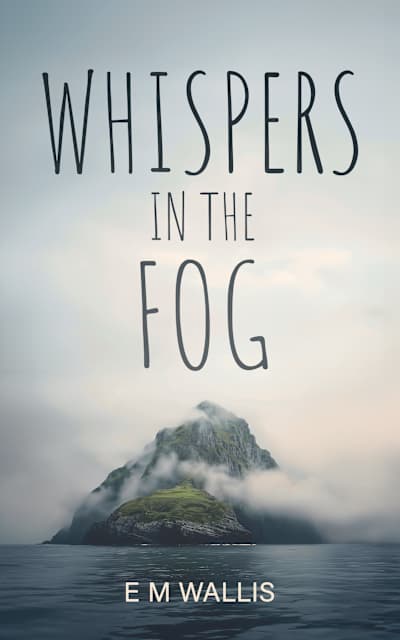
Some secrets are hidden for a reason. Others are waiting to be discovered.
On the mist-shrouded Misthaven Island, Lillie is troubled by disturbing visions that seem connected to events beyond her understanding. When she finds herself accused of murder, those extraordinary experiences become both a potential lifeline and a dangerous burden.
As suspicion grows and the island's secrets begin to emerge, Lillie must discover the truth before the darkness surrounding her claims another victim.
A supernatural mystery blending psychic visions, murder, suspense and an atmospheric island setting.
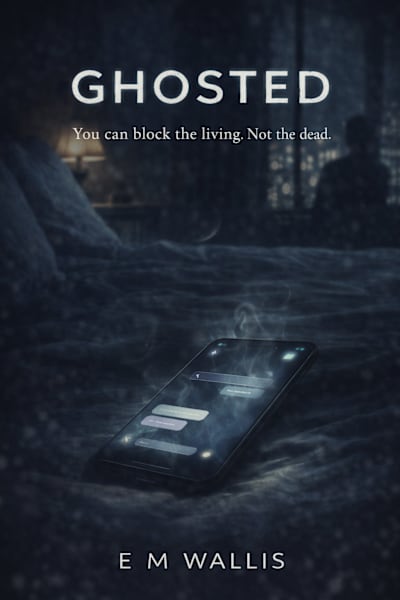
Some mysteries refuse to remain in the past.
GHOSTED is a supernatural mystery short story that explores the unsettling territory between the familiar and the unexplained.
For readers who enjoy atmospheric fiction, unexpected discoveries and the possibility that the world contains more than we can see, GHOSTED offers a shorter journey into the darker corners of my imagination.
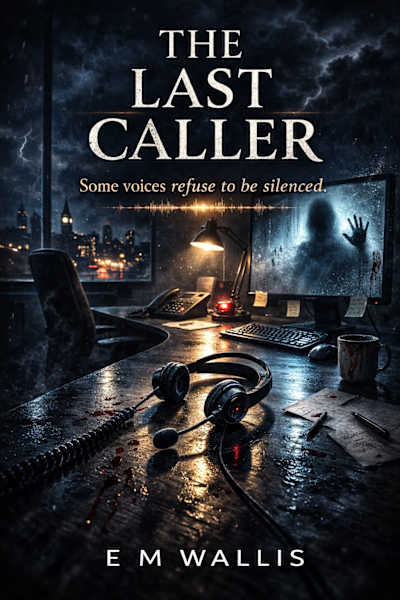
Some calls should never be answered. Especially those from the dead.
When helpline operator Jacob answers a mysterious late-night telephone call, he becomes entangled in a decades-old mystery involving a devastating house fire, buried family secrets and a woman whose voice should not be reaching him.
As the calls continue, Jacob and his friend Raj begin uncovering a disturbing history of deception, guilt and betrayal. But every discovery raises another question, and the closer Jacob gets to the truth, the more his understanding of his own past begins to unravel.
The Last Caller combines supernatural mystery, psychological suspense and dark family secrets in a haunting story about identity, loss and the consequences of long-buried lies.
A Final Word
Whether you prefer traditional ghost stories, Gothic mysteries or contemporary supernatural thrillers, I hope you've discovered something on this list that makes you want to turn off the television, settle into your favourite chair and lose yourself in a good book.
And if you decide to explore one of my stories, thank you. As an independent author, knowing that someone has chosen to spend their time in a world I've created means a great deal.
Happy reading.
E.M. Wallis
Author of Whispers in the Fog, GHOSTED and The Last Caller
What Would Make Your Top 25?
Have I included your favourite supernatural mystery? Perhaps there's a lesser-known ghost story you think deserves a place alongside the classics.
I'd love to hear your recommendations. After all, discovering a wonderful book is one of life's great pleasures, and the best recommendations often come from fellow readers.